 Skip to content
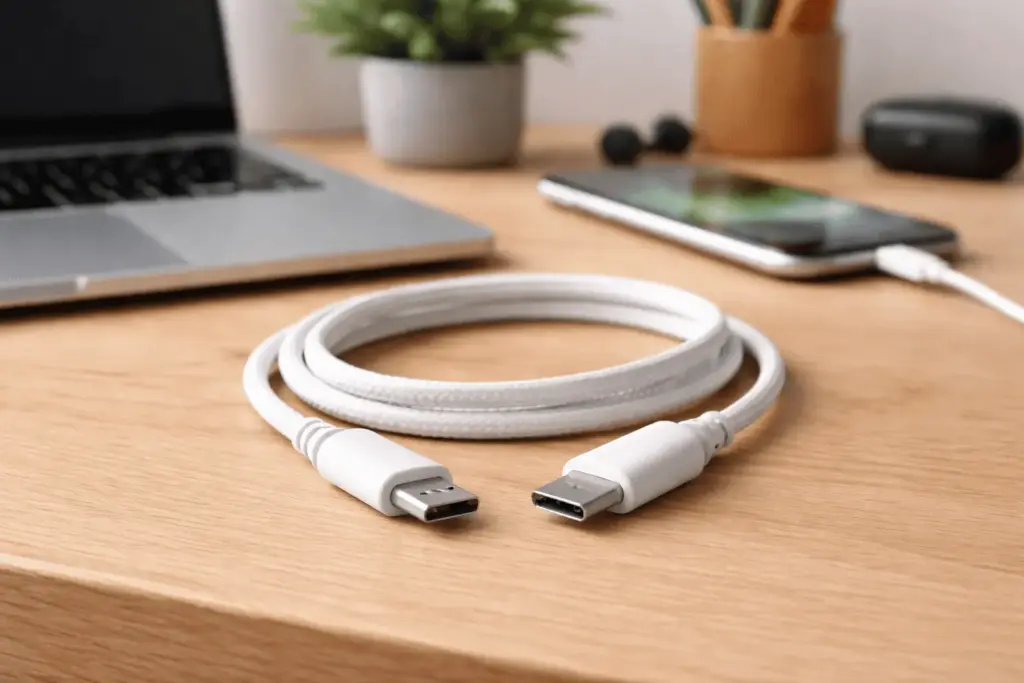
People use charging cables every day at their desks, in travel bags like backpacks, and at home. Since they get so much use, picking the right type of cable can help make sure it stays useful for longer. For businesses, USB-C cables and multi-cable charging sets are both popular choices. Each has its own benefits and features that work well for different people and situations.
In this article, we’ll look at USB-C cables and multi-cable charging sets, go over their pros and cons, and help you decide which one is best for your business, event, or promotion.
Why Cable Type Matters
Charging ports on devices have changed a lot. Older smartphones and accessories often used Micro-USB, Apple devices usually had Lightning connectors, and most new devices now use USB-C. In many workplaces today, employees may still use a mix of devices, such as:
- smartphones
- tablets
- laptops
- wireless accessories.
Because people use different devices, the type of cable you include in a promotional product can affect how many people can use it right away.
USB-C Cables
USB-C cables have a single, modern connector that is now standard on most new smartphones, laptops, and tablets. The plug is small, oval-shaped, and can be plugged in either way. Most USB-C cables have:
- a slim connector design
- smooth symmetrical plugs
- a simple single-cable structure.
Some cables have USB-C connectors on both ends, while others have USB-C on one end and USB-A on the other, so they work with older USB ports. Because the cable uses one connector type, the overall design is straightforward and compact.
Multi-Cable Sets
Multi-cable sets put several charging connectors into one cable. Instead of carrying different cables for each device, you can just switch between the connectors on the same cable.
These sets usually include multiple connector tips, such as:
- USB-C
- Lightning
- Micro-USB.
Some sets have a single cable that splits into several tips, while others let you attach different connectors when you need them. Since these cables have more connectors, they are a bit bigger and more complicated than regular single-connector cables.
Key Physical Differences
Here’s a quick look at the main physical differences between USB-C cables and multi-cable charging sets.
| Connector types | Single connector | Multiple connectors |
| Cable structure | Simple | Multi-tip or split |
| Design complexity | Minimal | More complex |
| Device compatibility | Limited to USB-C | Works with several ports |
Charging Speed and Power Differences
Charging speed is another thing that affects how useful a cable is over time. Many cables focus on convenience, but some are made to support faster charging and higher power. USB-C cables can usually handle higher power, especially with modern charging standards. This makes them suitable for devices such as:
- newer smartphones
- tablets
- Laptops that charge through USB-C.
Multi-cable sets are mainly made for compatibility. Because they have different connector types in one cable, they focus more on flexibility than on charging speed. From what we’ve seen, people choose USB-C cables when they want faster charging, and pick multi-cable sets when they need more compatibility.
When These Cables Are Used in Offices
People use charging cables all the time in offices. Employees keep them on their desks, in meeting rooms, or in shared spaces where devices need charging during the day.
Some common office uses include:
- charging phones at desks
- connecting tablets during presentations
- charging devices in meeting rooms
- keeping spare cables in travel bags.
USB-C cables work well in offices where most laptops and smartphones use the same port. In these situations, one cable can charge several devices. Multi-cable sets can be more practical in offices with a mix of device types. When different employees use different phones or tablets, having multiple connectors available can make the cable useful for more people.
Which Stays Useful Longer?
Technology changes quickly, and charging ports are always evolving. USB-C is becoming the standard for new devices, but many products still use other connectors. So, the type of cable you choose can affect how long it stays useful.
Advantages of USB-C cables
- simple and compact design
- widely used in newer devices
- durable because of fewer connector parts
Advantages of multi-cable sets
- compatible with several device types
- useful for mixed device environments
- reduces the need to carry multiple cables
We’ve noticed that multi-cable sets often work with more types of devices, especially in workplaces where people use different technology.
Quick Comparison Guide
The table below compares USB-C cables and multi-cable sets for charging speed, daily office use, and how long they stay useful.
| Factor | USB-C Cables | Multi-Cable Sets |
| Charging speed | Often supports faster charging and higher power delivery | Usually moderate speeds due to shared connectors |
| Device compatibility | Best for modern USB-C devices | Works with USB-C, Lightning, and Micro-USB devices |
| Everyday office use | Good for desks where devices share the same port | Ideal for offices with mixed device types |
| Portability | Slim and lightweight single cable | Slightly bulkier but replaces multiple cables |
| Durability | Fewer connector parts, simple design | More connectors but adaptable |
| Long-term usefulness | High if devices are mostly USB-C | Often higher across mixed or changing devices |
Branding Space
If your business is buying cables as promotional items, the design of the product also affects how your branding will look. Different cable styles offer different spots for logos or printed branding. Usually:
| USB-C cable | Cable housing or connector |
| Multi-cable set | Central hub or connector body |
Multi-cable sets often include a small hub where the connectors branch out. This central area can provide a visible surface for branding. USB-C cables usually have less space for branding, but you can still print a logo on the connector housing.
Choosing the Right Option for Bulk Orders
When businesses order charging cables in bulk, the choice often depends on who will use them and how they’ll be used. Factors that often influence the choice include:
- the types of devices employees or customers use
- whether compatibility or simplicity is more important
- how the cable will be carried or stored.
From our experience, businesses giving out cables to large groups often pick multi-connector options to make sure they work for everyone.
What We Recommend
We recommend USB-C cables if most of your devices are up-to-date and use this standard, since they’re simple and charge quickly. We also recommend pairing these items with other office items like custom printed pens or custom tote bags to create the perfect office gift pack. For workplaces or events with lots of different devices, multi-cable sets are the most flexible and help everyone stay connected. If you’re not sure which option is best for your team or event, our experts can help you pick the right solution and guide you through custom orders.