 Skip to content
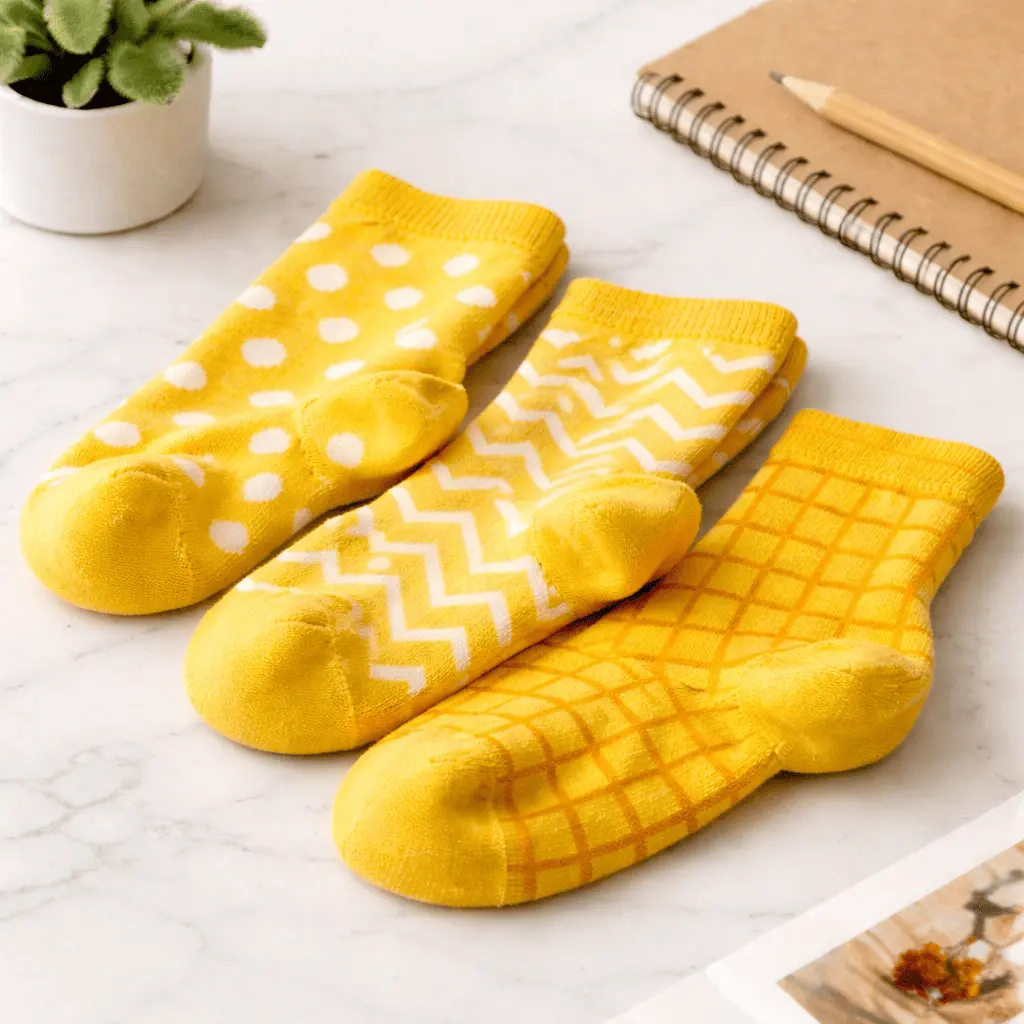
Custom socks are one of the most requested merchandise items by Australian organisations — but they’re also one of the easiest to get wrong. Different materials feel different on the foot. Different construction methods affect durability. And the way a logo is applied can completely change how often the socks are actually worn.
That’s why we created a guide to help you assess which material, construction, and design you should choose for your socks.
Part 1: Choosing the Right Sock Materials
When ordering socks, quality comes down to a few simple things: how thick the sock is, how it’s knitted, and how well it holds up over time.
Common Sock Materials Explained
| Material | Feel & Performance | Pros | Considerations |
| Cotton | Soft, breathable | Comfortable, familiar | Can lose shape without blending |
| Cotton Blend | Balanced | Durable, cost-effective | Most common bulk option |
| Bamboo | Very soft, moisture-wicking | Antibacterial, eco-friendly | Higher cost |
| Polyester | Smooth, strong | Holds colour well | Less natural feel |
| Elastane / Spandex | Stretch fibre | Improves fit & recovery | Always used in small % |
How Custom Socks Are Made (And Why It Matters)
Knitted Designs (Not Printed)
Most quality custom socks are knitted, meaning the design is woven directly into the fabric rather than printed on top. This allows the sock to stretch naturally and ensures the branding doesn’t crack, peel, or fade after washing.
Knitted designs are used for:
- Logos
- Patterns
- Stripes
- Repeating brand elements
This is the standard approach for bulk corporate socks.
Sock Thickness, Comfort & Durability
Thickness has a direct impact on how socks feel and how long they last.
| Lightweight | Thin, closer fit | Dress shoes, short wear |
| Medium weight | Balanced and comfortable | Everyday wear, corporate use |
| Heavier feel | Cushioned and durable | Sports, workwear, cold climates |
Reinforced Areas & Longevity
Well-made socks include extra reinforcement in high-wear areas, particularly the heel and toe. This doesn’t change the look of the sock but significantly improves durability, especially for staff or everyday wear.
Part 3: Designing Custom Socks That Get Worn
Here are some branding methods we recommend on socks:
Common Branding Methods
| Method | How It Works | Best For |
| Knitted (Jacquard) | Design woven into sock | Logos, patterns, durability |
| Embroidery | Logo stitched on | Small icons, premium look |
| Heat-applied | Complex artwork (less durable) |
Where to Place Your Logo
Popular logo placements include:
- Outer calf
- Ankle area
- Underfoot (subtle branding)
- Repeated pattern throughout the sock
💡 Socks with smaller, repeated logos or patterns are worn more often than large single logos.
Sock Design Guidelines (Bulk Orders)
Do
- Use 2–4 colours max
- Keep logos bold and simplified.
- Design for left/right socks
- Consider everyday outfits
Avoid
- Very thin lines or small text
- Overcrowding the sock
- Large solid colour blocks without contrast
- Complex gradients (for knitted designs)
Design Style Examples
| Design Style | Best For |
| Subtle logo + pattern | Corporate gifting |
| Bold brand colours | Events & campaigns |
| Minimal monochrome | Executive or staff wear |
| Playful graphics | Internal culture, teams |
Getting Better Value From Custom Socks
When treated like a real product, custom socks deliver exceptional brand value. Material choice, construction quality, and thoughtful design are what separate socks that live in drawers from socks that get worn weekly.
For Australian organisations buying in bulk, investing a little more time in these decisions results in higher wear rates, stronger brand visibility, and better ROI.